|
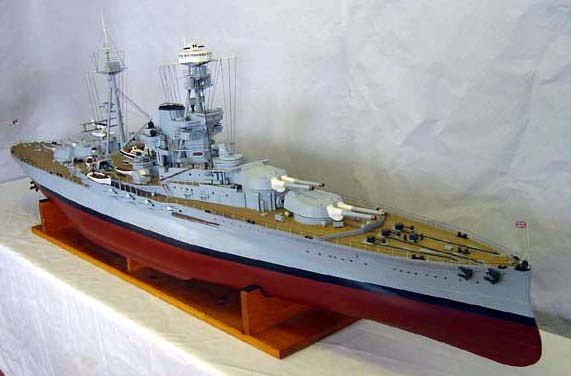
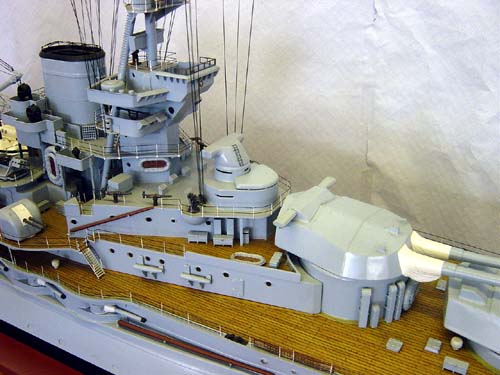
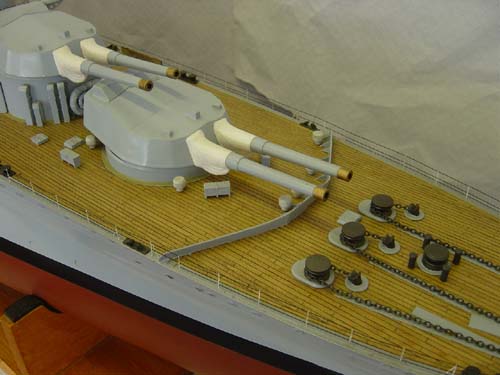
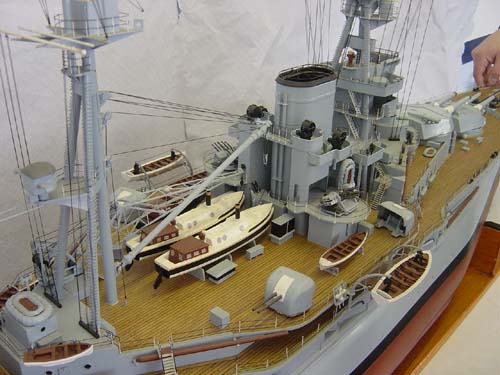
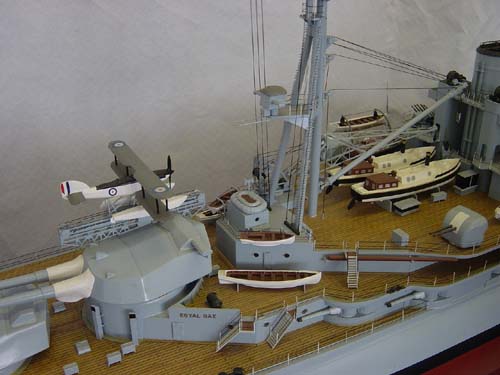
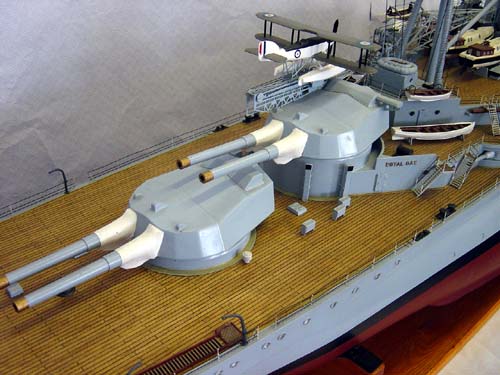
SEMI-KIT OF THE H.M.S. ROYAL OAK 1/100
HISTORY OF THE SHIP H.M.S Royal Oak
H.M.S Royal Oak was one of five Royal Sovereign Class battleships constructed for the Royal Navy between 1913 and 1917, the other four being Royal Sovereign, Resolution, Ramilies and Revenge. Two units of the class- Renown and Repulse- had been completed as battlecruisers and one, Resistance, had been cancelled. Royal Oak was laid down at Devonport Dockyard on January 15th 1914 and launched later that year on November 17th and commissioned in May 1916. Royal Oak was completed with a displacement of 25, 750 tons and measured 580 feet in length with a beam of 88.5 feet and a draught of 27 feet. Just under one thousand officers and men were needed to operate this mighty vessel. Royal Oak served in the Great War (1914-1918), fighting at the battle of Jutland, and was refitted between 1922 and 1924.
Displacement: 33,500 tons, weight increased after refit to 34,420 tons. Speed: 19 to 21.5 knots Range: 4,000 nautical miles. Compliment 1,040 to 1146. Armament: Eight 15 - inch Guns, twelve 6 - inch Guns, Eight 4 - inch AA Guns in pairs Sixteen 2 pounder in pairs. this was increased to 24. Four 21 inch Torpedo Tubes which were removed during modernization between the wars.
The five Royal Sovereign class battleships were laid down just before the outbreak of World War I. As 15-inch gunned successors to the Iron Duke class they were a reversion to the standard type of Dreadnought battleship rather than an improved Queen Elizabeth type. With little more than half the designed horsepower of the Queen Elizabeths they would only have made 21 knots, and could therefore never have formed a special 'fast division'.
The Royal Sovereigns introduced anew feature to British battleship design, the anti-torpedo bulge; in other words, an external water- or air-filled compartment capable of exploding a torpedo prematurely to minimise damage to the main hull. The Ramill;es was completed with the early type of shallow bulge, later replaced by a very deep type which reached almost to the upper deck battery.
This type of deep bulge was also fitted to the Royal Oak during her 1927 refit, but the other three were given the shallower type. Bulges had the effect of improving the behaviour of the class at sea, as they had been inclined to roll excessively.
|
